
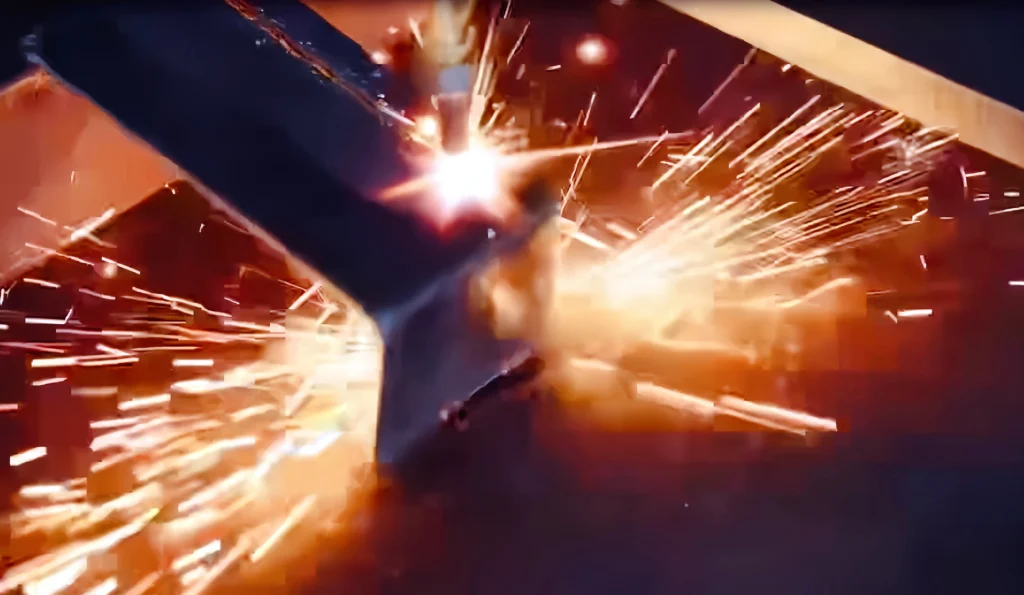
In metal fabrication, precision, speed, and cost per part decide who wins the job. Over the past decade, fiber laser cutting has replaced many CO2 and mechanical punch systems, setting a new standard for sheet metal and tube processing.
But not all laser cutting machines are built the same. When evaluating an industrial laser cutter, looking only at laser power wattage is a costly mistake. Real performance comes from how the machine bed, laser source, motion system, cutting head, CNC software, safety design, and gas control work together.
This guide explains the top 8 features of modern fiber laser cutting machines in plain English—so factory owners, procurement engineers, and workshop managers can compare systems with confidence.
Quick Answer: Which Features Matter Most?
If you are comparing fiber laser cutting machine features, focus on these 8 areas:
- Heavy-duty annealed machine bed
- High-efficiency fiber laser source and fiber delivery
- High-dynamic gantry and precision servo motion
- Intelligent auto-focus cutting head with capacitive height tracking
- Industrial CNC control and smart nesting software
- Dual shuttle exchange tables for continuous production
- Integrated safety enclosure and multi-zone fume extraction
- Dual gas circuit and proportional valve gas management
These features directly affect cut quality, cycle time, operating cost, maintenance, safety, and ROI.
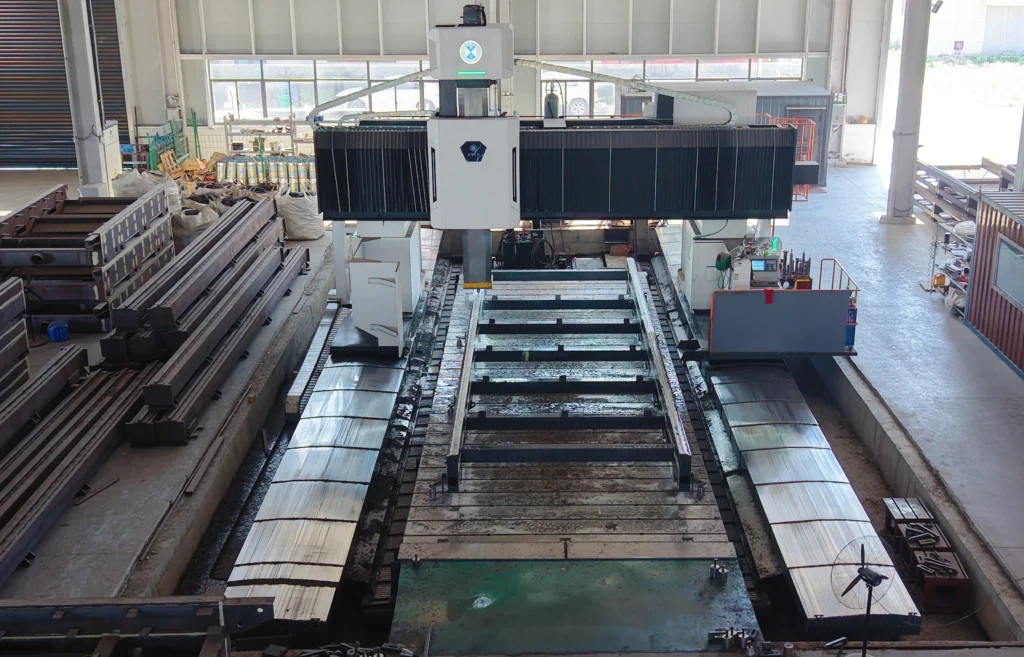
1. Heavy-Duty Annealed Machine Bed: The Foundation of Lifelong Precision
A high-power fiber laser cutter does not just sit still. It accelerates, stops, and changes direction at very high speeds—often at 1.5G to 2.5G. Without a rigid foundation, this movement creates micro-vibrations, thermal distortion, and premature wear.
What to look for
Welded steel plate gantry bed
Industrial-grade machines use high-tensile carbon steel plate welded structures. Lightweight aluminum profiles or non-reinforced pipe frames are not ideal for high-speed, high-power cutting.
Thermal stress annealing
High-end machine beds go through a 600°C heat treatment and natural aging process. This removes internal weld stress and helps prevent deformation over 15+ years of service.
Heavy damping mass
A heavier, rigid base absorbs the inertia of rapid directional changes. The result is cleaner corners, more consistent edges, and better long-term accuracy.
Typical production flow:
Weld fabrication → 600°C stress relief annealing → CNC heavy gantry milling → laser interferometer calibration.
Why it matters
A cheap bed may save money upfront, but it can lose accuracy within a few years. For fabricators running 24/7, the machine bed is not a accessory—it is the foundation of repeatable quality.
2. High-Efficiency Fiber Laser Source & Optical Delivery
The laser source is the heart of the system. Solid-state fiber lasers produce a concentrated beam with a wavelength of about 1.064 μm—roughly ten times shorter than CO2 lasers. This allows better absorption in reflective metals such as brass, copper, and aluminum.
Core capabilities to inspect
High wall-plug efficiency
Wall-plug efficiency means how much electricity becomes laser power. Fiber laser sources achieve about 35%–40% electrical-to-optical conversion efficiency, compared with only 8%–10% for CO2 systems. That can significantly lower monthly electricity costs.
Beam quality, or M² factor
The M² factor tells you how tight and clean the beam is. A lower M² is better.
- Single-mode beam: A concentrated spot for high-speed precision cutting of thin-to-medium sheets.
- Multi-mode beam: Optimized kerf width and smooth penetration on thick plates.
Maintenance-free fiber delivery
The beam travels through flexible armored fiber cables. There are no internal mirrors, beam benders, or laser gas consumables to maintain. This reduces downtime and simplifies daily operation.
3. High-Dynamic Gantry & Precision Servo Motion System
Laser cutting efficiency is not just about top traverse speed. In real sheet metal cutting, the machine constantly accelerates, slows down, and turns corners. That is why vector acceleration matters more than maximum speed alone.
| Motion Component | Technical Specification | Direct Production Impact |
|---|---|---|
| Gantry beam | Aerospace-grade extruded aluminum gantry | Ultra-low inertia, allowing fast direction changes |
| Drive motors | High-torque AC dual-drive servo motors | Eliminates backlash, maintains synchronous positioning |
| Transmission | Precision ground helical rack & pinion + linear guides | Positioning accuracy ≤±0.03 mm; repeatability ≤±0.02 mm |
| Acceleration | 1.5G–2.5G high acceleration | Up to 30% shorter cycle time for intricate sheet geometries |
Why it matters
If you cut many holes, contours, and small parts, acceleration decides your real output. A machine with high top speed but slow acceleration will lose time on every corner.
4. Intelligent Auto-Focus Cutting Head with Capacitive Height Tracking
The cutting head is where the laser meets the metal. Modern smart heads include optical monitoring, automated beam alignment, and collision protection.
Essential cutting head features
Automated focal position adjustment, or auto-focus
The head automatically sets the focal point based on material type and thickness. This can reduce setup time by up to 80% compared with manual focal lens adjustment.
Capacitive non-contact height sensing
The system continuously tracks the sheet surface within milliseconds. It adjusts for warped or uneven plates and keeps a constant standoff distance.
Dual-circuit water cooling
Independent cooling circuits protect the collimating and focusing optics from thermal lensing. This helps maintain stable focal drift during multi-hour, full-power runs.
Intelligent anti-collision and quick-release
If an upturned cut part hits the head during rapid movement, this feature helps prevent costly nozzle and sensor damage.
Why it matters
A smart cutting head reduces operator intervention, protects expensive optics, and keeps cut quality stable across different materials and thicknesses.
5. Industrial CNC Control System & Smart Nesting Software
Even the best mechanical hardware needs an intuitive CNC brain. Leading platforms such as FSCUT, CypCut, Beckhoff, and Siemens control the machine and connect production data.
Critical software and control functions
One-click automatic edge detection
Optical or capacitive detection automatically calculates the sheet’s alignment angle and origin point. No manual sheet squaring is needed.
Smart fly cutting, or scan cutting
The machine can cut aligned geometric arrays—such as perforated sheets—without stopping between cuts. This can reduce cutting cycle times by up to 50%.
Dynamic piercing and lightning piercing algorithms
These functions control laser frequency, duty cycle, and assist gas pressure during initial penetration. They help avoid spatter and prevent nozzle contamination on thick carbon steel.
Advanced nesting algorithms
Nesting software arranges parts like a puzzle to achieve sheet utilization rates above 90%–93%. That means less scrap and lower raw material overhead.
Why it matters
CNC and nesting software directly affect material cost, setup time, and operator productivity. A machine with good hardware but weak software will never reach its full ROI.
6. Dual Shuttle Exchange Tables for Continuous 24/7 Production
In high-volume job shops, idle time during loading and unloading cuts into profit. Dual shuttle tables solve this problem.
Key benefits
Fast pallet exchange: 10–18 seconds
While the machine cuts on the active inner pallet, the operator safely unloads finished parts and loads a new raw sheet on the external pallet.
High-low parallel hydraulic or chain-driven tables
Heavy payload capacity ensures smooth swap cycles without structural tilting.
Automation ready
Native compatibility with automated vacuum sheet lifters, single-sheet loaders, or multi-shelf automated storage and retrieval systems, also known as ASRS.
Why it matters
For continuous production, every minute of loading downtime is lost revenue. Dual exchange tables turn the laser into a much more productive asset.
7. Integrated Safety Enclosure & Multi-Zone Fume Extraction
Worker safety and environmental compliance are mandatory for Tier-1 fabrication facilities. Look for CE, FDA, and OSHA compliance.
Protective and environmental features
Class 4 laser source with fully enclosed safety housing
The enclosure prevents accidental exposure to scattered fiber laser radiation.
OD6+ certified laser protective viewing windows
Operators can safely observe cutting conditions in real time without removing protective eyewear.
Multi-zone dynamic exhaust dampers
The cutting bed is divided into independent vacuum chambers. The CNC system opens only the damper beneath the active cutting head. This maximizes suction efficiency, reduces blower energy consumption, and creates a smoke-free shop floor.
Why it matters
Safety is not just compliance. A clean, enclosed, well-ventilated machine protects operators, reduces cleaning, and supports higher production uptime.
8. Dual Gas Circuit & Proportional Valve Gas Management
Assist gases—oxygen, nitrogen, and clean dry compressed air—significantly affect edge finish, oxidation, and processing cost.
Features to check
Proportional valve precision control
The CNC system automatically meters gas pressure using preset parameters. This is more accurate and repeatable than manual mechanical regulators.
Clean air cutting integration
High-pressure compressed air cutting modules, typically 1.6–2.5 MPa, enable low-cost, high-speed cutting on mild steel and aluminum up to 6–10 mm. This can reduce consumable gas costs by up to 70%.
Gas leak detection and pressure drop alarms
These protect optical lenses from sudden pressure drops during continuous piercing operations.
Why it matters
Gas is a recurring cost. Better gas control lowers cost per part, improves edge quality, and reduces operator error.
Fiber Laser vs. CO2 vs. Plasma: Quick Feature Comparison
| Feature / Metric | Modern Fiber Laser | Traditional CO2 Laser | CNC Plasma Cutter |
|---|---|---|---|
| Wall-plug efficiency | 35%–45% | 8%–12% | 15%–25% |
| Thin sheet speed <4 mm | Ultra-high, up to 80 m/min | Moderate | Moderate to low |
| Cut edge quality & precision | ±0.03 mm, smooth and burr-free | ±0.05 mm | ±0.5–1.0 mm, beveled edge |
| Beam delivery maintenance | Zero, solid-state fiber | High, mirrors and alignment | Moderate, torches and nozzles |
| Reflective metal processing | Excellent: brass, copper, aluminum | Limited / high reflective risk | Good |
| Consumable operating cost | Very low | High | Moderate |
How to Choose the Right Fiber Laser Cutting Machine Features for Your ROI
When purchasing an industrial fiber laser cutter, match machine specifications directly with your production goals.
For high-mix, low-volume sheet metal workshops
Prioritize:
- CNC nesting flexibility
- Rapid auto-focus heads
- Optical edge detection
- Easy programming and quick changeover
This reduces setup time and helps you profit from smaller batches.
For high-volume continuous manufacturing
Invest in:
- Dual exchange pallet tables
- Heavy-duty annealed machine bed
- Automation loader interfaces
- Reliable CNC and nesting software
This keeps the machine cutting while material handling happens in parallel.
For heavy plate fabrication over 15 mm
Focus on:
- Multi-stage intelligent piercing
- High-wattage stability, such as 12 kW–30 kW
- Beam quality and gas control for edge perpendicularity
- Robust bed and motion system for heavy payloads
Laser power quick guide
1.5 kW–3 kW
Best for thin sheet metal processing with minimal operating costs.
6 kW–12 kW
The industry sweet spot for general fabrication job shops, delivering ultra-fast cutting on carbon and stainless steel.
15 kW–30 kW+
Designed for heavy structural steel and thick non-ferrous plates with superior edge perpendicularity.
